Even now I can recall my excitement at having arrived in Le Puy following a scenic trip on the train from St Etienne. I dropped my bags at the accommodation and set off to explore. This is when I first became familiar with the French 2 hour lunch break (with the shops all shutting down) and was lucky to grab some lunch at a local boulangerie just before the door closed. However, I could walk around and admire the sights including the Cathedrale Notre Dame and work out when to return to get my creancale stamped and also then tour the medieval cloisters
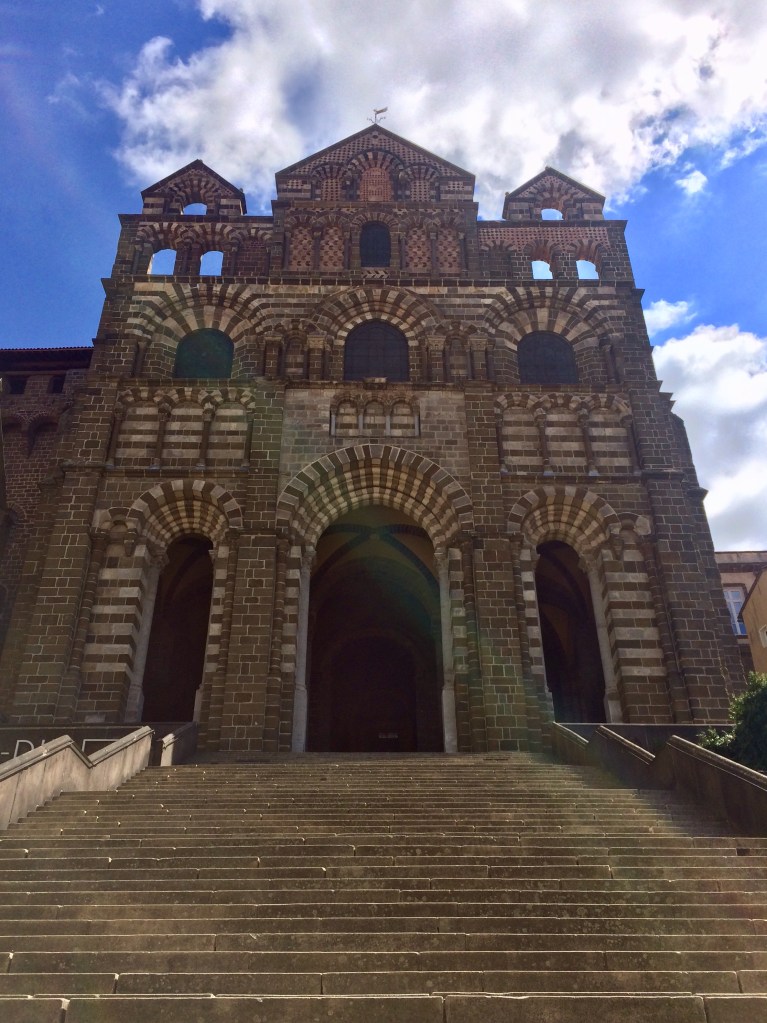
The morning of my departure I arose pre dawn, hence missing breakfast at the accommodation and headed for the Cathedrale for the pilgrims mass at 7 am. This is quite an experience and was well worth attending. It finished with us all singing a hymn and the cathedrale staff handing out small prayer books and pilgrim medallions to all of the walkers. On a quick show of hands about half of the gathered throng that morning were from France, with the rest coming from Europe, North America and Australia.
Off we all set and it was not long before everyone spaced out (nothing like a couple of hills to have this effect), due to the steady climb out of Le Puy. From then on it would be a series of hills, the odd village (complete with church which was often of a medieval vintage), and areas of farmland until the first nights accommodation.
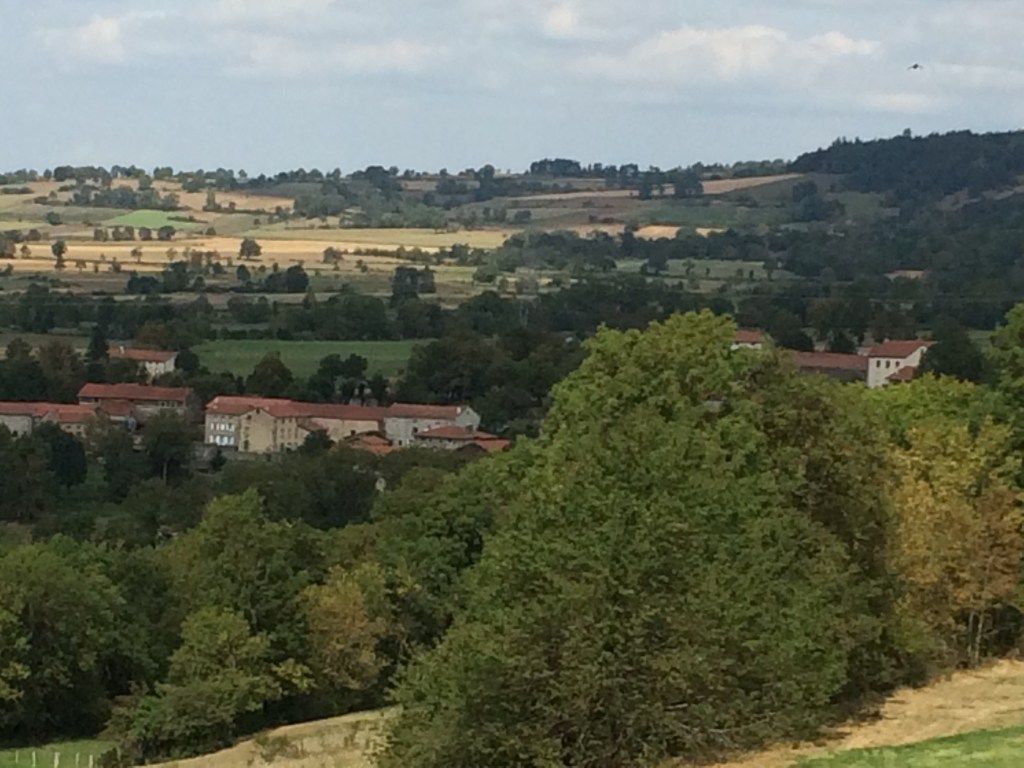
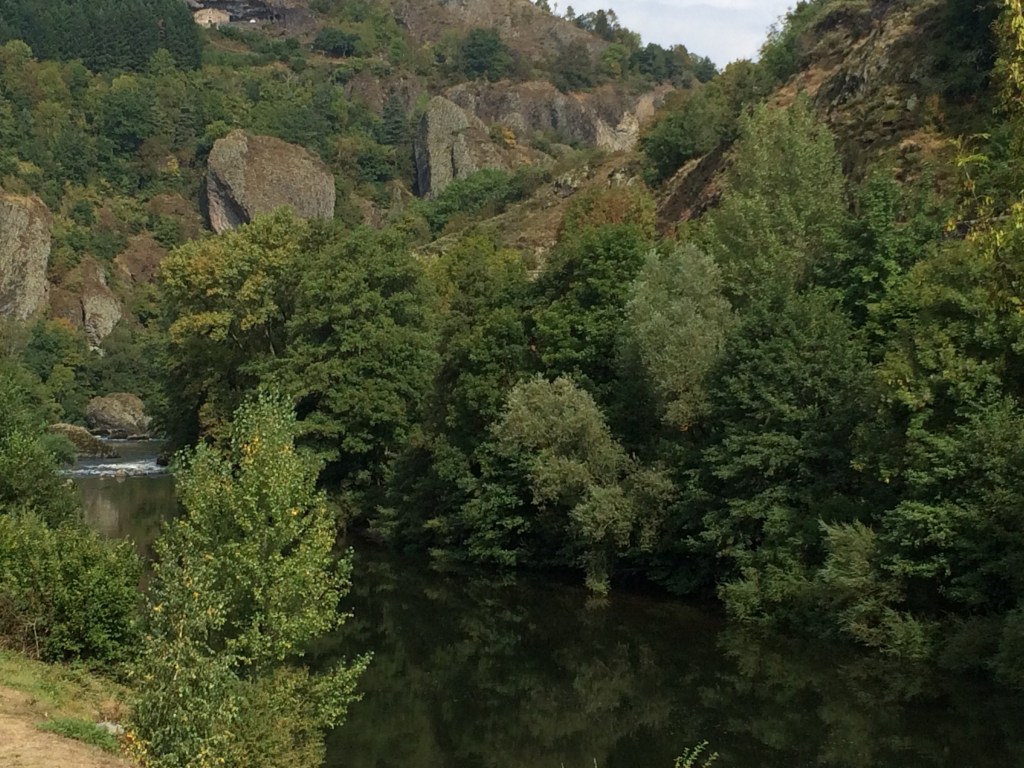
This was to be repeated over the next couple of days, except that there were now more wooded areas and the morning departures were at first light, with the landscape looking surreal in the mist. Foraging for fruit also became a morning ritual (to snack on during the day)! One highlight was stopping in a small village near a gorge for a break and watching as a rural butchers van motored in to ply its wares. It stopped outside of a nearby restaurant and the owner came out to do business. Then the owners dog appeared and ran around the van repeatedly in circles until the van driver threw it a piece of meat!
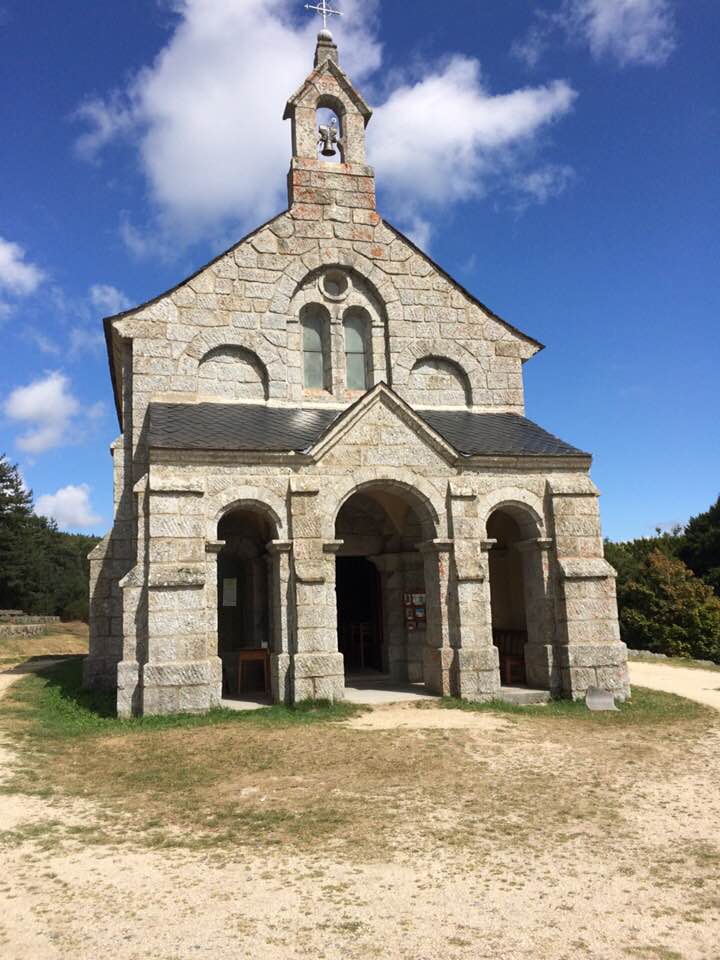
I found it worth stopping at the various churches along the way to marvel at the architecture and the stained glass windows. I found it difficult to photograph most of the windows due to the limited interior light. There were often small brochures or wall flyers inside these churches outlining some of the local history, plus some also had stamps available for the creancale. At the Chapelle St Roch I managed to have a short conversation with one of the locals who was sweeping the church floor, plus then have my creancale stamped. Two French tourists who turned up in a flash sports car also asked for a creancale stamp (for their map) but were denied -“You have to walk to get one” was the response in French from the local man (I could understand spoken French to some extent).
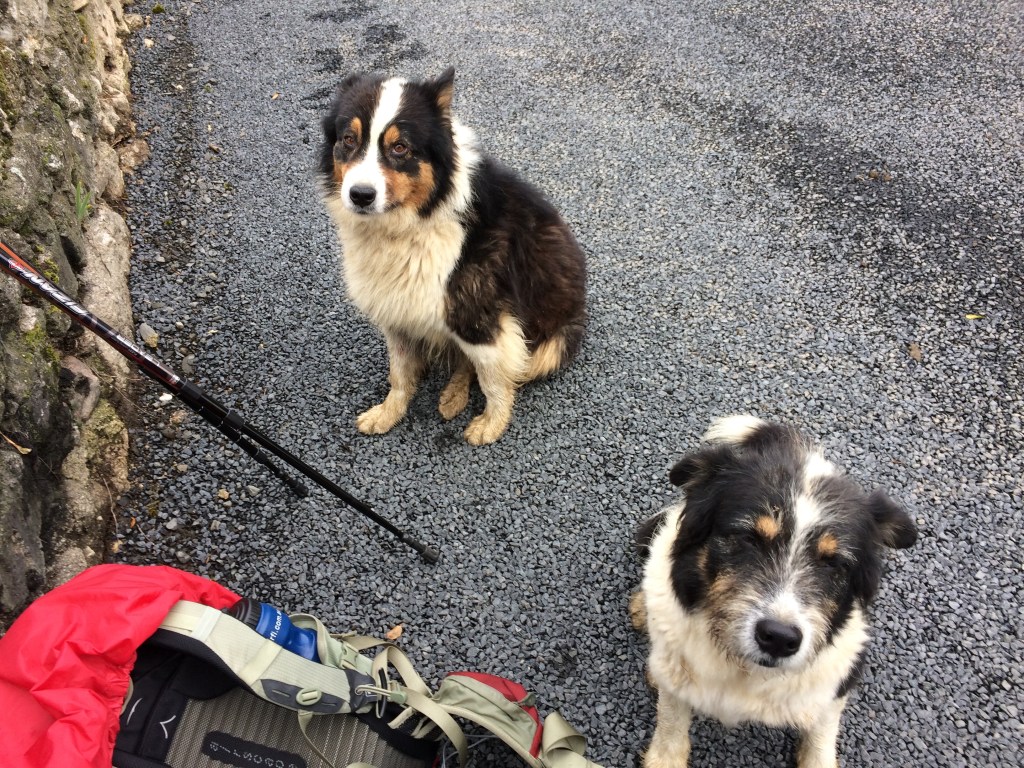
Following several hours of hill walking I would stop for a snack mid morning – it was taking some time during the early days on the trail to gauge how much food I actually needed. One morning I opted to stop in a side lane of a small village (mainly so that I could be away from the main road and put the backpack down). Some road walking is also required along the GR 65. I retrieved some snacks looked around and voila I now had two little ‘friends’ at my feet. Somehow I think they were very practised at this! Shortly afterwards another small farm dog followed another woman hiker for close to 5 km.
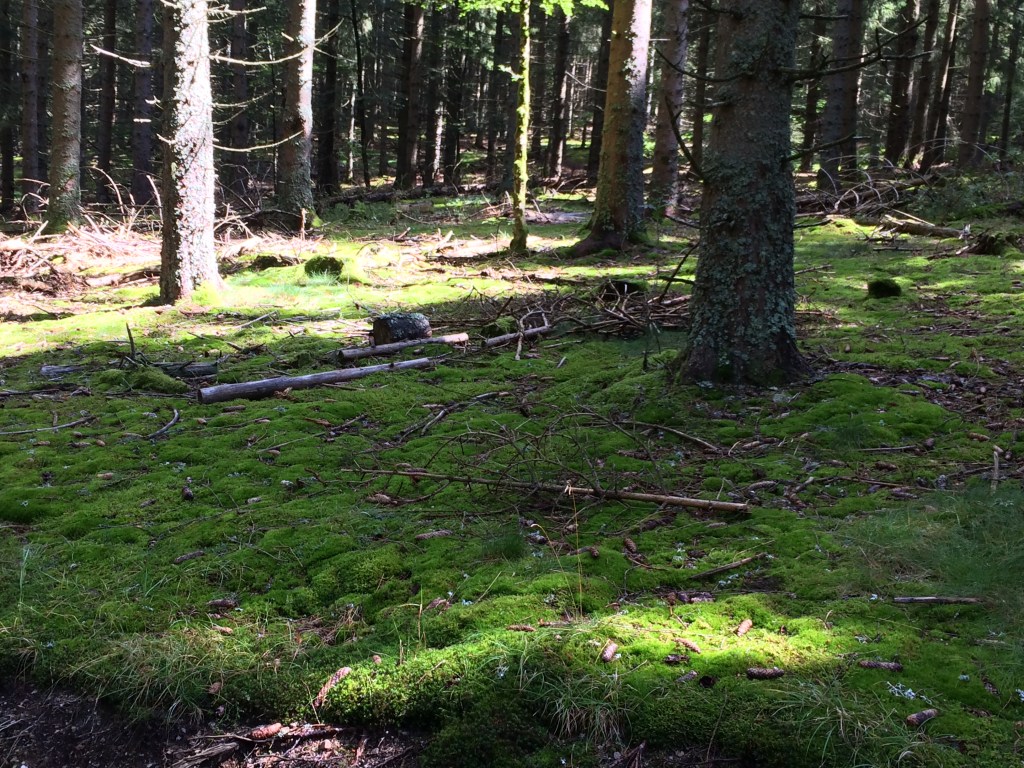
Finding an area in woodland to stop for lunch was a high priority as it was often quite warm in the middle of the day, plus I was usually nowhere near a village (particularly one with shops that were also open). I was not alone in adopting this approach. If it was really warm and there was no shade to be found I would walk on until such a time that I could find a suitable place. Hydralyte (electrolyte replacement solution) was already becoming a mainstay along with keeping an eye out for potable water.
There was the pealing of church bells from nearby villages and at times the tinkling of farm bells from the sheep or cattle in nearby fields. At times there were chickens running around (always near a farm yard) and it was not uncommon to see also farm cats most of whom were wary of strangers. Then there were the gorgeous coloured butterflies every now and then, because there were still some flowers around. I was never successful in snapping any photos of the butterflies, nor of the crickets and grass hoppers who would all be chirping with gusto by mid afternoon in the nearby fields. I saw the occasional very large native French snail and thought that I would have plenty of opportunities to get a photo later on during my travels along the GR 65. Unfortunately this was to prove to not be the case.
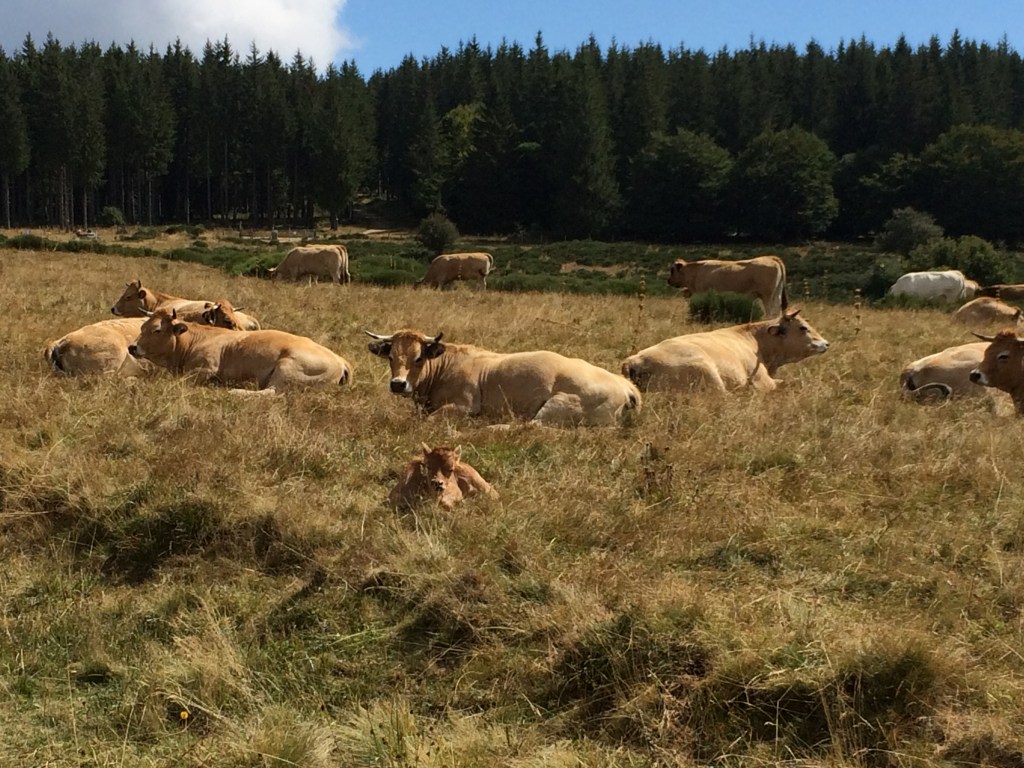
I never thought that I would get up close and personal with the cattle but in fact this happened on several occasions. Fortunately the magnificent Aubrac cattle seemed quite used to seeing hikers walk by as they rested chewing their cud whilst keeping a watchful eye out! The calves were also quite cute but the local advice was to not ever get between one and its mother!!! This meant that on one occasion I had to detour off the trail as there was an Aubrac calf sleeping slap bang across it. One look at those horns on all of the adult females and it is okay ….. I will detour.
Even better was some of the cheese that was made from the milk of these magnificent cattle or the aligot that was served up some nights. Being a fan of French cheese this was a major plus, because it already seemed that wherever you ate at night most of the time it was local produce that was being served. If there was enough time at the end of the day there was always other sights to look at if staying in a village or small town.
To be continued: Tales from the Via Podiensis -B) Traversing the Aubrac Plateau https://debverranlivinglifeoutdoors.travel.blog/2019/11/16/tales-from-the-via-podiensis-b-traversing-the-aubrac-plateau/
 Living the Life in the Great Outdoors
Leave a comment